Located in the Mediterranean Region, Kilis is a charming and quite beautiful city with a bridge between the Southeast and the Mediterranean Sea. Kilis is located at a distance of 58 kilometers to Gaziantep and 10 kilometers to the Syrian border.
Climate and Cuisine
Mediterranean climate in the city dominates the summers, and winters are mild. Droughts increase in June and September. Large vegetation is located in the city, as it has a rainy climate the rest of the year.
Kilis Cuisine includes world-famous dishes and delicacies featuring the most famous flavors of our country. It is a mixture of Arab and Mediterranean cuisines. Sour malhıta, lebeniye, Kilis tava, oruk, kübbülmüşviyye, şıhıl, möhşe, keşkek, bulamaç, and gerebiç are the local delicacies. You should definitely try the desserts katmer and cheese semolina in the city.

Cheese semolina halva, turkish cuisine.
Places to Visit
- Neşet Efendi Mansion: Built in 1925, this mansion is a beautiful building with 7 rooms.
- Oylum Mound: The mound is home to copper-stone age and Hellenistic ruins.
- Ravanda Castle: Built in 11th century, the castle has a panoramic view of the city.
- Fountains Salih Ağa, İpşir Paşa, and NemikaÇ Beautiful landmarks that must be seen.
- Hoca Hammam: This is one of the works of Canbolat Bey in the period of Kanuni Sultan Süleyman in 1545.
- Hasanbey Hammam
- Kilis Houses
- Söğütlüdere Recreational Area
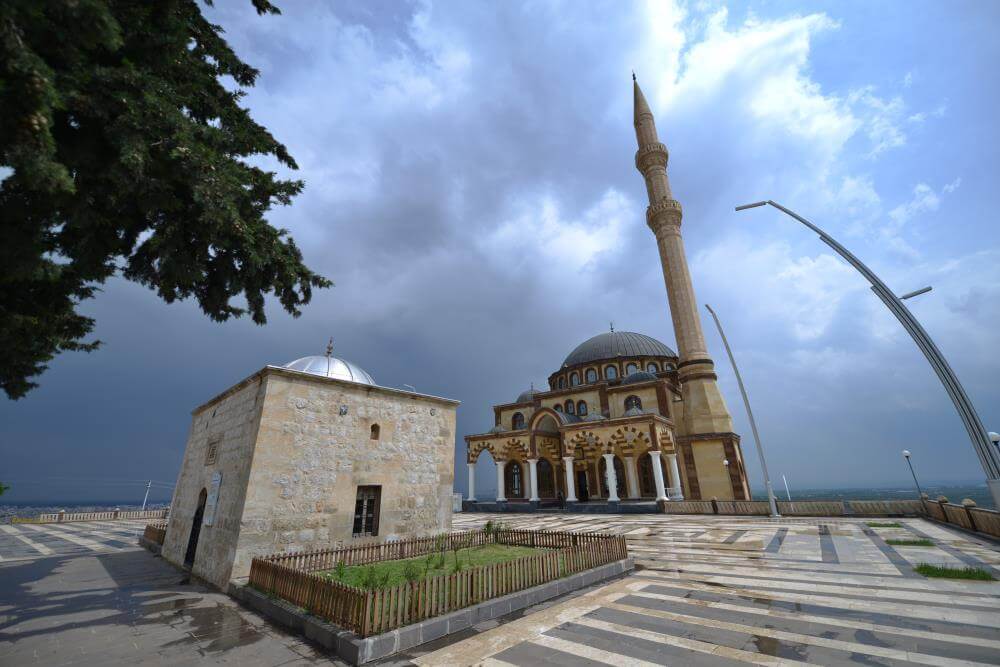
Sheik Muhammed Bedevi Hz. tomb and mosque in Kilis. Foto: kulturportali.gov.tr
Festivals
The traditional Musabeyli feast is held every year on the 27th of August in the Musabeyli district of Kilis. The competitions during the festival are among the most remarkable events.
How to Get There
If you want to go by air, you need to choose the Gaziantep airport, as there is no local airport in the city. The city is also reachable by road through surrounding cities Gaziantep, Kahramanmaraş, Şanlıurfa, and Osmaniye.